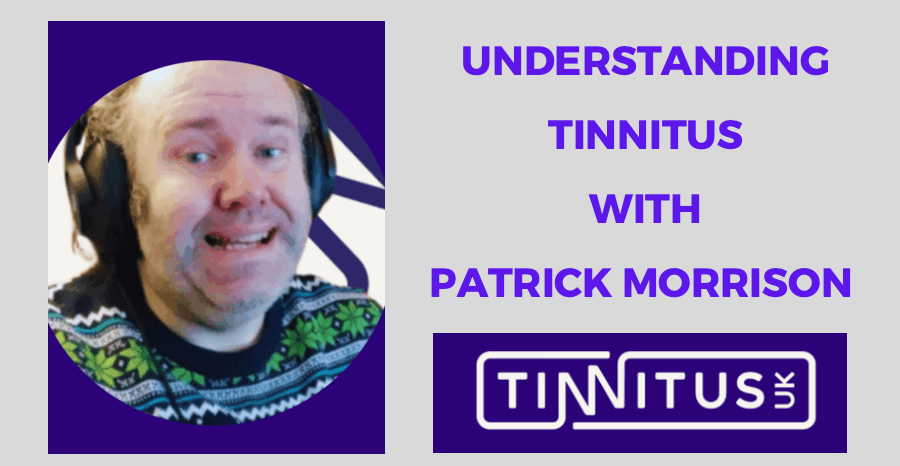
Patrick Morrison is the Senior Tinnitus Support Officer at Tinnitus UK. In this role, he plays a key part in evaluating and developing the charity’s support services.
Today, Patrick explains what tinnitus is, how it can affect people, and the approaches that can help manage it in everyday life.
He shares practical information, describes some common experiences people report, and highlights strategies that many find helpful.
After a short introduction to the work of Tinnitus UK, Patrick’s presentation becomes a lively question-and-answer session with the audience, covering topics such as:
Can tinnitus cause dizziness or problems with balance?
How can I find support to help me cope with tinnitus?
Does tinnitus affect children?
Are there any drugs that can help?
What research is currently taking place into technologies that might reduce the effects of tinnitus?
Patrick’s talk is available below for you to watch on YouTube:
Want to know more? Why not check out our Resources Page to discover organisations which offer help and support with tinnitus and hearing loss?
If you’ve ever experienced a persistent ringing, buzzing, or hissing sound in your ears when there’s no external noise, you’re not alone. This condition, known as tinnitus, affects millions of people worldwide. For some, it’s a temporary nuisance; for others, it’s a chronic challenge that impacts daily life. But what exactly is tinnitus, what causes it, and how can you manage it? Let’s explore.
What Is Tinnitus?
Tinnitus is the perception of sound in the ears or head without an external source. It can manifest as ringing, buzzing, whistling, hissing, or even musical tones. While often associated with hearing loss, tinnitus itself is not a disease but a symptom of an underlying issue.
Photo by Anton Malanin on Unsplash
What Causes Tinnitus?
There are several potential causes of tinnitus, including:
Hearing Loss: Damage to the tiny hair cells in the inner ear (cochlea) can lead to tinnitus, often accompanying age-related or noise-induced hearing loss.
Exposure to Loud Noise: Prolonged or sudden exposure to loud sounds—such as concerts, machinery, or explosions—can trigger tinnitus.
Ear Infections and Blockages: Earwax buildup, infections, or fluid in the ear can sometimes cause temporary tinnitus.
Medications: Certain drugs, including some antibiotics, anti-inflammatory drugs, and high doses of aspirin, can lead to or worsen tinnitus.
Medical Conditions: Tinnitus can be linked to conditions such as Ménière’s disease, high blood pressure, TMJ (temporomandibular joint) disorders, and even stress and anxiety.
Head or Neck Injuries: Trauma to these areas can affect the auditory nerves, leading to tinnitus.
Neurological Disorders: Conditions like multiple sclerosis can sometimes trigger tinnitus as well.
Does Tinnitus Always Accompany Hearing Loss?
Not necessarily. While many people with tinnitus also have some degree of hearing loss, others experience it with normal hearing. This suggests that tinnitus isn’t just about the ears—it’s also about how the brain processes sound. In some cases, the brain attempts to compensate for a loss of auditory input, leading to the perception of phantom sounds.
Photo by Ecliptic Graphic on Unsplash
Does Tinnitus Ever Go Away?
For some people, tinnitus is temporary and resolves on its own—such as after attending a loud concert. However, for others, it becomes a long-term condition. While there’s currently no universal cure, many people find ways to reduce its impact and improve their quality of life. Some even experience habituation, where the brain gradually tunes out the sound, making it far less noticeable. This process doesn’t mean the tinnitus disappears, but rather that your brain stops focusing on it, similar to how you stop noticing background noise over time. It takes patience, but many people find that with the right approach, tinnitus becomes much less intrusive.
Photo by Margarida Afonso on Unsplash
How Can You Learn to Live with Tinnitus?
If you have persistent tinnitus, there are several strategies to help manage it:
Sound Therapy: Background noise (white noise machines, nature sounds, or soft music) can help mask tinnitus and make it less noticeable.
Hearing Aids: If tinnitus is linked to hearing loss, hearing aids can amplify external sounds, making tinnitus less prominent.
Cognitive Behavioral Therapy (CBT): Counseling and CBT can help reframe negative thoughts about tinnitus, reducing stress and improving coping mechanisms.
Relaxation Techniques: Stress can worsen tinnitus, so activities like mindfulness, deep breathing, and yoga may help.
Avoiding Triggers: Reducing caffeine, alcohol, and exposure to loud noises may help prevent tinnitus from worsening.
Support Groups & Online Communities: Connecting with others who experience tinnitus can be incredibly reassuring and helpful. You’re not alone, and sharing coping strategies can make a big difference. There are many online forums, social media groups, and local support networks where people share their experiences and advice. Engaging with these communities can provide emotional support and practical tips for managing tinnitus in everyday life.
Tinnitus can be frustrating, but it doesn’t have to control your life. By understanding its causes and exploring different management strategies, many people find relief and learn to live comfortably with it.
If tinnitus is affecting your daily life, consider trying some of the above ideas, if these don’t seem to work, seek medical advice.
Keep the conversation going
What has helped you manage it? Use our Contact Us page to share your thoughts and let us know what helps you to manage your tinnitus.
We use cookies on our website to give you the most relevant experience by remembering your preferences and repeat visits. By clicking “Accept”, you consent to the use of ALL the cookies.
This website uses cookies to improve your experience while you navigate through the website. Out of these, the cookies that are categorized as necessary are stored on your browser as they are essential for the working of basic functionalities of the website. We also use third-party cookies that help us analyze and understand how you use this website. These cookies will be stored in your browser only with your consent. You also have the option to opt-out of these cookies. But opting out of some of these cookies may affect your browsing experience.
Necessary cookies are absolutely essential for the website to function properly. This category only includes cookies that ensures basic functionalities and security features of the website. These cookies do not store any personal information.
Any cookies that may not be particularly necessary for the website to function and is used specifically to collect user personal data via analytics, ads, other embedded contents are termed as non-necessary cookies. It is mandatory to procure user consent prior to running these cookies on your website.