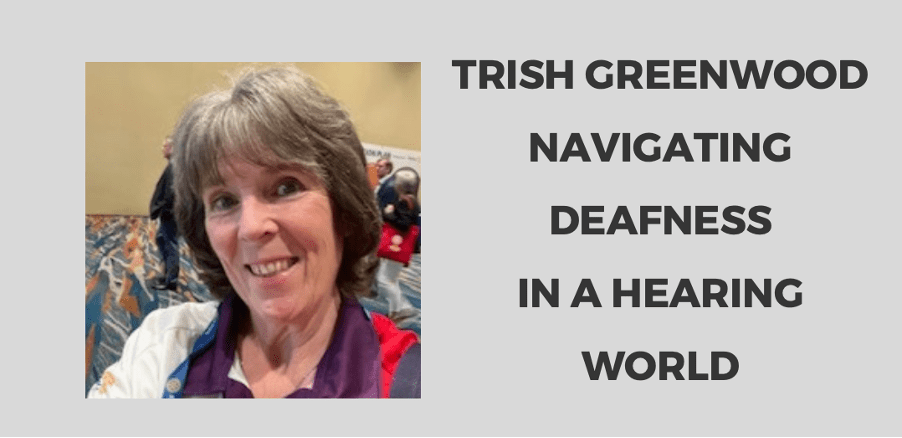
Rotarian Trish Greenwood started to lose her hearing at the age of 27 and struggled to find acceptance of her disability in the hearing world that she had always known. Determined to adapt, she wore hearing aids and learned BSL.
When she became profoundly deaf, she had a cochlear implant, but to her surprise, she discovered she was not accepted in a Deaf world either. So where does she belong? Watch here to discover more.
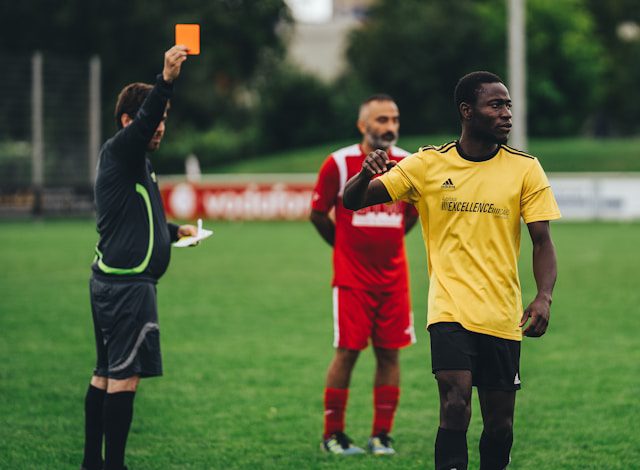
Have you ever been watching a heated football match, and when a controversial decision is made, you know exactly what the player is shouting—even though you can’t hear a thing? That, right there, is lipreading in action.
Photo by Omar Ramadan on Unsplash
It might surprise you to know that lipreading (also called speechreading) is a skill we all use, whether we realise it or not. It’s a natural part of how humans communicate, especially in noisy environments like pubs, busy streets, or parties. Our brains cleverly combine what we hear with what we see—the shape of the mouth, the movement of the lips, and facial expressions—to work out what’s being said.
We’ve Taught Ourselves
Most of us haven’t had formal training in lipreading. We just pick it up as we grow and communicate with others. From an early age, we start recognising the visual clues that go with speech. It becomes instinctive—until we try it without sound and realise how tricky it can actually be!
Photo by Mario Amé on Unsplash
But Not All Words Can Be Read on the Lips
Here’s the catch: lipreading isn’t perfect. Some words look identical on the lips, even though they sound completely different. That’s because certain sounds are made inside the mouth or throat and don’t change the visible shape of the lips much.
Photo by Volodymyr Hryshchenko on Unsplash
Take for example:
Pat, bat, and mat – These all look nearly the same when spoken.
Cough, golf, and gone – Not much happening visually here either.
Can and man – Try mouthing them silently in the mirror—they’re hard to tell apart!
This is actually what ventriloquists rely on. They avoid using words with noticeable lip movements and instead focus on sounds that can be disguised. That’s how they “throw” their voice and make it seem like the dummy is doing all the talking.
Lipreading Is a Lifeline for Many
For people with hearing loss, lipreading becomes a vital communication tool. When sound is muffled, distorted, or absent, being able to read the lips, expressions, and gestures of the speaker can make a huge difference. It’s empowering. It brings confidence. And in many cases, it makes communication possible again.
Photo by Alexandru Zdrobău on Unsplash
Can You Improve Your Lipreading?
Absolutely. While we all use some level of lipreading already, taking it further is totally possible—and beneficial. Lipreading classes are available in many countries, often through adult education centres, community colleges, or charities supporting deaf and hard-of-hearing people.
These classes don’t just teach you to recognise mouth shapes. They often include:
Strategies for filling in the blanks
Tips for dealing with common problem sounds
Practice with everyday conversations
Support from others who are also learning
Plus, they’re a great way to meet people and feel less isolated if hearing loss is new to you.
Photo by Brett Jordan on Unsplash
Other Tips to Boost Your Lipreading
Here are a few more ways to enhance your lipreading skills:
Face the speaker: Make sure you can see their face clearly—good lighting helps.
Ask people to speak clearly, not loudly: Shouting can distort lip movements.
Don’t be afraid to ask for repeats or rephrasing: You’re not alone.
Use context clues: Understanding the topic helps predict words.
Stay relaxed: Tension makes concentration harder.
A Skill Worth Celebrating
Lipreading is an amazing example of how adaptable humans are. Whether you’re aware of it or not, you’re probably using it every day—and with a bit of focused learning, it can become an even more powerful ally in communication.
If you’re interested in learning more, why not look for a local lipreading class or an online group to join? Your eyes might just become your new ears.
If you’ve recently started to experience hearing loss, you might have come across something called Sign Supported English, or SSE for short. It’s often taught in lipreading and communication classes aimed at adults who’ve lost their hearing later in life. But is SSE a real sign language?
That’s a question that sparks strong opinions—and the answer depends on how you define a “real” sign language.
What Is Sign Supported English?
SSE is not its own language. It’s a communication method that uses signs borrowed from British Sign Language (BSL), but with spoken or written English grammar and word order.
Think of it as English… with signs added for support.
Photo by Timothy Dykes on Unsplash
People who use SSE will usually speak at the same time as they sign, using the structure of English rather than the grammar of BSL, which is a fully-fledged visual language with its own syntax and rules. SSE can be incredibly helpful for people who:
Grew up speaking English
Have acquired deafness later in life
Use hearing aids or cochlear implants
Can still hear some speech sounds
Rely heavily on lipreading
By combining signs with spoken English, SSE can reinforce understanding—especially in noisy environments or when the speaker’s mouth is hard to see.
What Do BSL Users Think?
Many Deaf BSL users would say that SSE is not a real sign language, and they’re right—linguistically speaking.
BSL is a complete, natural language with its own structure, vocabulary, and cultural significance. It’s not just “English on the hands.” Using BSL means thinking visually, using facial expressions as grammar, and following a different word order altogether.
Photo by Fotos on Unsplash
From that perspective, SSE isn’t a true language, because it doesn’t stand alone. It’s always tethered to English.
But that doesn’t mean it’s not useful or meaningful.
A Bridge for Those With Acquired Deafness
For many people who lose their hearing after childhood, learning BSL can feel like learning a completely foreign language—and that can be overwhelming.
SSE offers a gentle introduction. It helps people stay connected to spoken English while adding visual cues to aid comprehension. It can be especially powerful when used alongside lipreading, giving people multiple ways to piece together meaning in conversation.
Photo by Toa Heftiba on Unsplash
In this way, SSE can serve as a bridge—not just to better communication, but sometimes as a stepping stone toward learning full BSL later on.
Is There an American Equivalent?
Yes, there is! In the United States, the equivalent system is called Signed Exact English (SEE) or sometimes Manually Coded English (MCE).
Photo by freestocks on Unsplash
Like SSE, SEE is not a true sign language. It uses signs from American Sign Language (ASL) but follows English grammar and word order. It was originally developed to support the teaching of English literacy in Deaf children, but it’s also used by some people with acquired hearing loss or those who want to support spoken English with signs.
ASL, like BSL, is a complete visual language in its own right. And just like in the UK, many ASL users do not consider SEE to be a “real” sign language, although they may acknowledge its usefulness in certain contexts.
So… Is SSE Real?
If by “real” we mean a complete and natural language, then no—SSE is not. But if we mean a powerful, practical tool that helps people communicate and connect, then absolutely yes.
At Hearing Ambassadors, we believe in supporting every kind of communication that helps people feel included, confident, and heard—whether that’s BSL, SSE, lipreading, or a mix of all three.
If you or someone you love is exploring new ways to communicate after hearing loss, don’t be put off by labels. The best method is the one that works for you.
Check out more of our articles on sign language in our Hear Hub
When we think of sign language, we often picture British Sign Language (BSL) or American Sign Language (ASL), both of which have their own grammar and structure. But did you know there’s another system designed to support spoken language and improve communication for deaf and hard-of-hearing individuals? Cued Speech is a visual communication tool that helps bridge the gap between spoken and written language, making speech more accessible through hand cues.
Photo by Towfiqu barbhuiya on Unsplash
What is Cued Speech?
Developed in 1966 by Dr. R. Orin Cornett, it is a way to improve literacy and language comprehension for people with hearing loss. It is not a sign language but rather a method that enhances lipreading by using eight handshapes to represent consonant sounds and four placements around the mouth to represent vowel sounds.
For example, if you watch someone say the words pat, bat, and mat, they all look very similar on the lips. Cued Speech clarifies these words by adding distinct hand cues to indicate which consonant sound is being spoken.
How Does it Work?
Cued Speech pairs hand movements with the natural spoken language to visually differentiate sounds that look similar when lipreading.
Hand Placements: Show vowel sounds by positioning the hand in different locations near the face.
Mouth Movements: Remain synchronized with natural speech so that the person receiving the cues can combine both visual elements for clear understanding.
Why is it Important?
Cued Speech directly represents spoken language. It can help people who are Deaf to develop stronger reading and writing skills.
Unlike “traditional” sign languages like BSL or ASL, Cued Speech can be adapted to any spoken language.
By clarifying similar-looking sounds, it makes lipreading far more effective.
Cued Speech directly represents speech sounds so it can be used to learn different spoken languages without confusion.
Examples of Cued Speech in Action
Let’s take a look at a few examples where Cued Speech makes communication clearer:
Example 1: Differentiating Sounds
Imagine someone is saying the words pet and bet. Without sound, they look identical on the lips. With Cued Speech:
Pet might use a handshape representing “P” at the chin placement for “E.”
Bet might use a different handshape representing “B” at the same chin placement for “E.”
Example 2: Supporting Speech Development
Learning to read can be a challenge for children who have hearing loss because they don’t always have clear access to phonics. This is where Cued Speech comes in. It gives them a visual representation of sounds, helping them understand the relationship between spoken and written language.
Cued Speech is valuable for:
✅ Children with hearing loss – Helps them learn spoken language and improve literacy.
✅ Adults with acquired hearing loss – Supports better speech perception.
✅ People with auditory processing disorders – Aids in distinguishing sounds more effectively.
✅ Families of deaf children – Helps create an inclusive home environment.
Photo by CDC on Unsplash
Your Cued learning journey starts here!
There are free training resources available for families with deaf children and it doesn’t take long to learn the basics. Many learners pick up the system quickly with practice.
Would you like to explore Cued Speech for yourself or your family? try these websites :
Makaton is a unique communication system that combines signs, symbols, and speech to support language development and understanding. Originally developed in the 1970s, it is widely used in the UK to help people with communication difficulties express themselves more effectively.
Photo by Assad Tanoli on Unsplash
This sign language uses many simplified signs from BSL and is particularly beneficial for anyone with who finds difficulty with communication, such as people with hearing loss or speech and language difficulties. It is used by both children and adults in many situations.
Unlike full sign languages, Makaton is designed to support and encourage spoken language, rather than replace it. It can help users feel more confident in communication, reducing frustration and improving social interactions.
How is it Taught and Used?
Makaton is typically introduced through structured training programs, available through Makaton tutors and online resources. It is used in:
Schools and nurseries to help children with communication needs
Hospitals and healthcare settings to support patients with speech difficulties
Community spaces like libraries and supermarkets to improve accessibility
Everyday home life for families who want to enhance communication with loved ones
The Role of Music and Songs
Photo by Erika Giraud on Unsplash
It is often taught through singing and music, making it fun and engaging. Popular children’s programs like Something Special with Mr Tumble have introduced the language to a wider audience, and many nurseries and schools incorporate it into songs to help children learn words and signs together. Indeed, out own grandchildren are learning it!
How Does Makaton Relate to BSL?
It borrows signs from British Sign Language (BSL) but has key differences: The signs are simplified to make them easier to learn. The signs follow spoken word order, whereas BSL has its own grammar and structure. It also uses symbols alongside signs to reinforce meaning.
Because of these differences, Makaton is not a full sign language like BSL, but it can serve as a stepping stone for those who may later learn BSL.
Is There an ASL Version
Whilst it is primarily used in the UK, similar systems exist in other countries. In the US, Signed Exact English (SEE),serves a similar purpose by supporting communication with simplified signs while following spoken English word order. SEE is based on American Sign Language (ASL) but is not considered ASL itself, as ASL has a distinct grammatical structure. In Austrailia Key Word Sign is very popular
Makaton in Everyday Life
Many public places and services now use Makaton to create a more inclusive environment. Look out for Makaton signs in: Hospitals – helping patients with communication difficulties Libraries – staff signing to assist young children and those with disabilities Supermarkets – where employees are trained to use basic signs for customer service
Photo by Jason Leung on Unsplash
Common Misconceptions About Makaton
❌ Makaton is just simplified sign language. – While it uses BSL signs, it is designed to support spoken language, not replace it. ❌ If you use Makaton, you won’t learn to speak. – Research shows that Makaton actually helps many people develop their speech by reinforcing words with visual signs and symbols. ❌ Only children use Makaton.– People of all ages benefit from Makaton, including adults recovering from strokes.
Final Thoughts
It is a powerful communication tool that enhances understanding and inclusion for people with hearing, speech and language challenges. While it is not a full sign language like BSL or ASL, it plays a crucial role in bridging the gap between spoken and signed communication.
Try these free resources to get started.
The Makaton Charity – Free Resources. The official Makaton Charity offers a variety of free downloadable resources, including vocabulary lists, activities, and guides. Access requires a free account.
Twinkl – Makaton Teaching Resources. Twinkl provides a wide range of printable and digital teaching resources, including worksheets, eBooks, games, and PowerPoints, suitable for various educational settings.
In the early stages of life, babies are eager to communicate, yet they often struggle to express their needs and feelings. As parents, we strive to understand our little ones, but the lack of verbal communication can lead to frustration—for both babies and caregivers. This is where teaching a Baby Sign can be a game-changer.
Photo by Kelly Sikkema on Unsplash
No matter which sign language you chose, ASL, BSL or others, with Baby Sign, you can unlock an incredible tool for early communication, helping babies express themselves before they can speak. But the benefits go far beyond just reducing frustration—let’s explore some of the most significant advantages of teaching simple signs to babies.
1. Baby Sign leads to early communicaton
Babies typically start to speak their first words around 12 to 18 months, but their desire to communicate begins much earlier. Since motor skills develop faster than speech, babies can use their hands to make signs long before they can form words. Teaching Baby Sign gives them the ability to express basic needs—such as hunger, thirst, more, finished—early on.
This can significantly reduce crying and frustration for both the baby and the parent. Instead of guessing what’s wrong, a baby who has learned signs for common needs can clearly indicate what they want, leading to a more peaceful environment at home.
2. Strengthening the Parent-Child Bond
When a baby uses sign language, parents can engage more effectively with them, creating meaningful interactions that deepen their bond. Communicating through signs encourages more eye contact, closer observation, and more focused attention from parents. This back-and-forth interaction helps develop a stronger connection with your child while supporting emotional development.
Photo by Ana Tablas on Unsplash
3. Boosting Cognitive Development
Using Baby Sign as part of a baby’s early development can positively impact cognitive skills. Studies show that babies who learn sign language tend to have better problem-solving skills, as signing encourages them to think about communication in different ways. The process of learning, remembering, and using signs can also enhance memory and concentration, both critical for overall cognitive development.
Photo by Tamara Govedarovic on Unsplash
4. Accelerating Spoken Language Development
Contrary to some misconceptions, teaching babies sign language doesn’t delay speech development. In fact, many studies suggest the opposite—babies who learn sign language often develop verbal language skills more quickly than their peers. Signing helps them associate words with objects and actions, which aids in language comprehension.
Because babies who sign are already familiar with the idea of communicating, they often transition to spoken words with greater ease. As they learn to speak, they gradually rely less on signs, but the foundational communication skills remain strong.
5. Fostering Inclusivity and Awareness
Teaching babies Baby Sign promotes inclusivity and awareness from an early age. It opens up a world of communication with the Deaf and hard-of-hearing community, fostering empathy and understanding. Children raised with an awareness of sign language may grow up to be more compassionate and inclusive individuals, aware of different ways to communicate with others.
6. Enhancing Fine Motor Skills
Signing involves the use of fine motor skills, such as hand movements and coordination. As babies practice different signs, they develop greater hand-eye coordination and dexterity. These motor skills are not only useful for signing but also for other activities like holding utensils, grasping objects, or later, learning to write.
7. Encouraging a Love of Learning
Introducing a second language, whether through signing or spoken words, stimulates curiosity and a love of learning. Baby Sign offers babies a new way to interact with their world, encouraging exploration and discovery. By making communication easier, babies are more likely to engage in learning opportunities and develop confidence in their abilities to express themselves.
Photo by Jonathan Borba on Unsplash
Getting Started with Baby Sign
If you’re considering teaching your baby a Sign Language, it’s important to start with simple, everyday words like “milk,” “eat,” “more,” and “all done.” Repetition and consistency are key—use the signs every time you say the word, and make sure to model the sign with your hands while maintaining eye contact. Babies typically start signing back around 6 to 9 months, though every child is different.
There are many resources available, from books and videos to baby sign language classes, that can guide you through the process. The goal is to make signing a natural part of your daily routine, so you and your baby can enjoy the benefits of early communication.
Photo by Chayene Rafaela on Unsplash
Final Thoughts about Baby Sign
Teaching signs to babies is a rewarding and enriching experience for both parents and children. It not only facilitates early communication but also supports emotional, cognitive, and social development. With benefits ranging from reduced frustration to enhanced language skills, it’s no wonder more parents are choosing to introduce sign language as part of their baby’s growth journey.
By giving your baby the gift of sign language, you’re opening a door to understanding, bonding, and a lifelong love of learning. If you’re ready to dive in, check out this fantastic YouTube video
As part of our ongoing series on sign languages, we’re taking a closer look at British Sign Language (BSL) and American Sign Language (ASL). While both are rich, fully developed languages with their own unique history, culture, and identity, it’s easy to assume they’re the same—after all, the UK and the US share English as a spoken language. But what about sign language?
Photo by freestocks on Unsplash
You may be surprised to discover that BSL and ASL are completely different languages, each with its own grammar, hand shapes, and origins, making them as different as English and Japanese.
Let’s explore 4 key differences between BSL and ASL.
BSL dates back to the 18th century and developed from a mixture of regional sign systems in the UK. Thomas Braidwood’s School for the Deaf, one of the first Deaf schools in Britain, was instrumental for formalising the language.
ASL has roots in French Sign Language (LSF), introduced to America in the early 1800s by Laurent Clerc and Thomas Gallaudet. This means ASL shares more similarities with LSF than BSL!
2. Hand Shapes & Fingerspelling
BSL uses a two-handed fingerspelling system, where both hands form letters.
ASL uses a one-handed fingerspelling system, similar to LSF.
3. Grammar & Sentence Structure
BSL and ASL do not follow English grammar—they have their own rules:
Photo by Clarissa Watson on Unsplash
BSL Structure(Subject-Object-Verb – SOV)
English: I am going to the shop
BSL:Shop I go
ASL Structure (Topic-Comment or Subject-Verb-Object – SVO)
ASL often follows Subject-Verb-Object (SVO) order but also uses Topic-Comment structure, where the topic is stated first, followed by additional information.
Example:
English: I am going to the shop tomorrow.
ASL:Tomorrow, shop I go.
(Raised eyebrows on Tomorrow to indicate time reference.)
In ASL, facial expressions and body shifts play a crucial role in meaning. For example, when asking a yes/no question, eyebrows are raised; for a WH-question (who, what, where), eyebrows are furrowed.
Photo by Josue Escoto on Unsplash
4. Use of Mouth Patterns & Non-Manual Features
BSL uses facial expressions primarily for emphasis, emotion, and some grammar, but it relies more on mouth patterns to mirror English words than ASL does
ASL is highly facially expressive, using eyebrow movements and body shifts to indicate tone and grammatical aspects like questions. These non-manual signals are grammatically required by ASL. They are not just optional expressions. They change the meaning of signs and help structure sentences.
Regional Differences & Variations
Both languages have regional dialects:
In BSL, sign variations exist across the UK, with distinct differences between Scotland, England, and Wales.
In ASL, variations occur between states and even between BASL (used in African American Deaf communities) and standard ASL.
Both ASL and BSL are rich, expressive languages that have evolved over time to meet a wide range of communication needs. With adaptations for all ages—babies, children, and adults—sign language offers accessibility and flexibility for everyone. Stay tuned for our next article, where we’ll explore more about how sign language is used in different settings!
Here are some great resources to get you started: BSL and ASL
We use cookies on our website to give you the most relevant experience by remembering your preferences and repeat visits. By clicking “Accept”, you consent to the use of ALL the cookies.
This website uses cookies to improve your experience while you navigate through the website. Out of these, the cookies that are categorized as necessary are stored on your browser as they are essential for the working of basic functionalities of the website. We also use third-party cookies that help us analyze and understand how you use this website. These cookies will be stored in your browser only with your consent. You also have the option to opt-out of these cookies. But opting out of some of these cookies may affect your browsing experience.
Necessary cookies are absolutely essential for the website to function properly. This category only includes cookies that ensures basic functionalities and security features of the website. These cookies do not store any personal information.
Any cookies that may not be particularly necessary for the website to function and is used specifically to collect user personal data via analytics, ads, other embedded contents are termed as non-necessary cookies. It is mandatory to procure user consent prior to running these cookies on your website.