Hear Glue Ear – How this remarkable, inexpensive device is changing the lives of children with glue ear
Dr Tamsin Holland Brown, describes how her award-winning affordable device “Hear Glue Ear” is supporting families in the UK and beyond. Tamsin shares her story of what led to this amazing innovation and how her own family played such a big part in its development.
To find out more about the Hear Glue Ear device and see coverage on BBC, please visit the website: HearGlueEar
Come and join us and discover how your organisation can deliver inclusive, hearing-friendly environments with Hearing Ambassadors
Got 4 minutes? This powerful story shows what “inclusion in action” really looks like in practice.
Trish Greenwood shares a simple but impactful example of how inclusion can be brought to life. It’s a reminder that creating inclusive environments doesn’t always require big changes—just awareness, understanding, and a willingness to act.
Discover how your organisation can deliver inclusive, hearing-friendly environments with Hearing Ambassadors
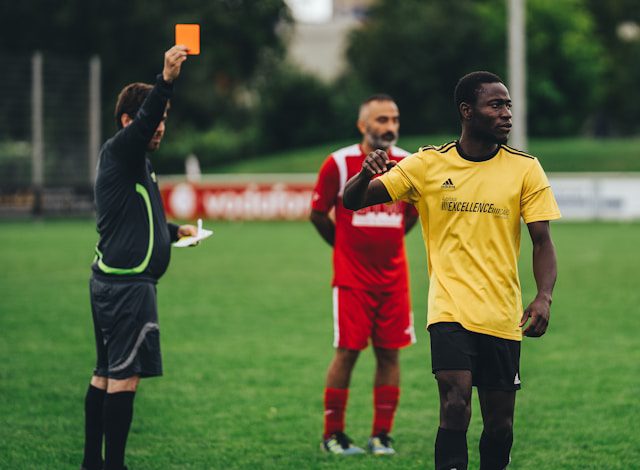
Have you ever been watching a heated football match, and when a controversial decision is made, you know exactly what the player is shouting—even though you can’t hear a thing? That, right there, is lipreading in action.
Photo by Omar Ramadan on Unsplash
It might surprise you to know that lipreading (also called speechreading) is a skill we all use, whether we realise it or not. It’s a natural part of how humans communicate, especially in noisy environments like pubs, busy streets, or parties. Our brains cleverly combine what we hear with what we see—the shape of the mouth, the movement of the lips, and facial expressions—to work out what’s being said.
We’ve Taught Ourselves
Most of us haven’t had formal training in lipreading. We just pick it up as we grow and communicate with others. From an early age, we start recognising the visual clues that go with speech. It becomes instinctive—until we try it without sound and realise how tricky it can actually be!
Photo by Mario Amé on Unsplash
But Not All Words Can Be Read on the Lips
Here’s the catch: lipreading isn’t perfect. Some words look identical on the lips, even though they sound completely different. That’s because certain sounds are made inside the mouth or throat and don’t change the visible shape of the lips much.
Photo by Volodymyr Hryshchenko on Unsplash
Take for example:
Pat, bat, and mat – These all look nearly the same when spoken.
Cough, golf, and gone – Not much happening visually here either.
Can and man – Try mouthing them silently in the mirror—they’re hard to tell apart!
This is actually what ventriloquists rely on. They avoid using words with noticeable lip movements and instead focus on sounds that can be disguised. That’s how they “throw” their voice and make it seem like the dummy is doing all the talking.
Lipreading Is a Lifeline for Many
For people with hearing loss, lipreading becomes a vital communication tool. When sound is muffled, distorted, or absent, being able to read the lips, expressions, and gestures of the speaker can make a huge difference. It’s empowering. It brings confidence. And in many cases, it makes communication possible again.
Photo by Alexandru Zdrobău on Unsplash
Can You Improve Your Lipreading?
Absolutely. While we all use some level of lipreading already, taking it further is totally possible—and beneficial. Lipreading classes are available in many countries, often through adult education centres, community colleges, or charities supporting deaf and hard-of-hearing people.
These classes don’t just teach you to recognise mouth shapes. They often include:
Strategies for filling in the blanks
Tips for dealing with common problem sounds
Practice with everyday conversations
Support from others who are also learning
Plus, they’re a great way to meet people and feel less isolated if hearing loss is new to you.
Photo by Brett Jordan on Unsplash
Other Tips to Boost Your Lipreading
Here are a few more ways to enhance your lipreading skills:
Face the speaker: Make sure you can see their face clearly—good lighting helps.
Ask people to speak clearly, not loudly: Shouting can distort lip movements.
Don’t be afraid to ask for repeats or rephrasing: You’re not alone.
Use context clues: Understanding the topic helps predict words.
Stay relaxed: Tension makes concentration harder.
A Skill Worth Celebrating
Lipreading is an amazing example of how adaptable humans are. Whether you’re aware of it or not, you’re probably using it every day—and with a bit of focused learning, it can become an even more powerful ally in communication.
If you’re interested in learning more, why not look for a local lipreading class or an online group to join? Your eyes might just become your new ears.
About twelve years ago, my husband lost most of his hearing due to a viral infection. Just like that, he went from fully hearing to severely deaf—and our lives were turned upside down. At first, we didn’t fully grasp the impact it would have. But little by little, the effects of hearing loss crept into every corner of our lives. He struggled to understand speech. Conversations became exhausting. Group gatherings were overwhelming. Telephone calls were impossible. Even simple tasks like chatting to someone at the supermarket checkout became a source of stress.
Photo by Kelly Sikkema on Unsplash
We both found it hard. He was frustrated that I didn’t seem to speak clearly. I couldn’t understand why he wasn’t responding. The miscommunications built up. Over time, my husband began to withdraw. He’d sit quietly with a book rather than try to join in a conversation. I think he found it more comforting to be alone than to face the embarrassment of asking people to repeat themselves again and again.
Evenings out with friends stopped altogether. The wall of background noise in restaurants made conversation unbearable. He no longer felt like himself. And I no longer felt like I could reach him.
We knew something had to change—but what?
The First Turning Point: Finding Support
Just when things were starting to feel hopeless, we discovered our first glimmer of hope: a LinkUp Support Group run by Hearing Link Services.
It was life-changing.
For the first time, we met others who understood exactly what we were going through. We realised that hearing loss doesn’t just affect one person—it affects everyone close to them. And more importantly, it’s not just about the ears. It’s about communication, relationships, confidence, and connection.
Photo by Dan Meyers on Unsplash
We began to make small changes at home. I’d turn off the radio when we were talking. I’d face him when I spoke. I’d double-check he’d caught anything important. These things are second nature to us now—and yes, we’ve laughed at some of the hilarious things he thought I’d said!
If you’re struggling like we were, please know: you’re not alone, and there is help out there.
The Second Turning Point: Learning to Sign
A few years later came our second big breakthrough. We discovered that our local Adult Education Centre was running a Lipreading and Signed Communication course.
We didn’t know much about lipreading, and to be honest, we weren’t sure sign language would be relevant. Wasn’t it just for people born deaf? But we were curious, and we decided to give it a go.
We’re so glad we did.
The class was aimed at people like us—those who had lost their hearing after childhood. The method used was a combination of Lip Reading and Sign Supported English (SSE), which uses British Sign Language (BSL) signs alongside spoken English word order. It felt strange at first, like stepping into a whole new world. But slowly, it began to click.
And with it, something else clicked too: communication came back.
Photo by Volodymyr Hryshchenko on Unsplash
Rebuilding Confidence and Connection
Bit by bit, my husband’s confidence returned. His mood lifted. And most importantly, he felt included again.
When we go out in a group now, I can sign key parts of the conversation to him, making social situations far less isolating. Even better, our friends have become curious. They ask questions. They try out signs. They engage with him in ways they never did before.
It’s been transformational – for both of us.
Sign language hasn’t just helped us communicate. It’s helped us reconnect. It’s opened a door to inclusion, not just in our relationship, but in the wider world around us.
Photo by Brett Jordan on Unsplash
Give Sign Language a Go!
If you or someone you love is navigating hearing loss, why not give sign language a try?
It’s not just about words—it’s about connection, confidence, and a better quality of life.
That’s what our charity, Hearing Ambassadors is all about too.
Click here to see other posts about Sign Languages , how to get started, and the many ways it can make a difference.
Sign language is a rich and expressive way of communicating using hand movements, facial expressions, and body language. Different countries and regions have their own distinct languages, such as British Sign Language (BSL), American Sign Language (ASL), and French Sign Language (LSF). Just as with a spoken language, there are many regional dialects and variations.
Origins
Sign languages have developed naturally over centuries within Deaf communities. Some of the earliest recorded uses date back to Ancient Greece, but more structured systems emerged in the 18th and 19th centuries.
Photo by Greece Newstart on Unsplash
LSF – Was developed in France, and influenced ASL and others. This is one of the earliest formalised sign languages. BSL – Evolved from various localised sign systems in the UK. MVSL – Originated in a small Deaf community in Martha’s Vinyard, USA. MVSL contributed to the development of ASL. LSE – Was developed in Spain where monks used signs to communicate.
Local Deaf communities have given a special shape to their language, education, and culture, so it isn’t surprising that each country’s and region’s versions have evolved differently.
Primary Users
Signs are used to good effect by those with communication challenges, but the primary users are Deaf and hard-of-hearing people, their families and colleagues.
Are the Signs the Same Worldwide?
No! Just like spoken languages, sign languages have their own grammar, vocabulary, and regional dialects. For example, BSL and ASL are completely different languages, even though both are used in English-speaking countries. We will look into some of the differences in a later article.
Photo by Kyle Glenn on Unsplash
Derivatives of BSL
British Sign Language is the basis of several derivatives including:
SSE (Sign Supported English) – which uses English word order with BSL signs to support communication. Makaton – a simplified system that combines signs, speech, and symbols to help people with communication difficulties. Baby Sign – a way of teaching babies to communicate their needs before they can talk.
An Official Language?
Yes! Some countries have made an official recognition of sign language, giving it legal protection and meaning that it can be used in education, public services, and government communication.
Photo by Rosemary Li on Unsplash
The countries which officially recognise sign language include:
United Kingdom – BSL became an officially recognised language in 2022. New Zealand – NZSL is an official language alongside English and Māori. South Africa – gave SASL official language status in 2023.
Many other countries have recognised their national sign languages in some legal capacity, but full rights and access still vary.
More Than Just a Language
Sign language is deeply connected to Deaf culture and identity. It’s not just a way to communicate—it fosters community, and understanding. It breaks down communication barriers and brings people together.
Sign language is a beautifully expressive way to communicate, and we believe it is a valuable skill for everyone.
Photo by Assad Tanoli on Unsplash
By taking the time to learn even the basics, hearing people can contribute to a more accessible and connected world and show respect, understanding, and a commitment to equality.
Learning any new language benefits the brain, and sign language is no exception. This is because it engages multiple parts of the brain—including those responsible for language processing, spatial awareness, and motor coordination—so this new skill can improve your cognitive function.
Why not start today? Whether through online courses, community classes, or simply practicing with a friend, begin a rewarding journey that will open doors to new experiences and deeper human connections.
If this has sparked your interest and you would like to learn more, please explore the links below.
Not everyone immediately understands how to communicate effectively with someone who is hard of hearing. That’s why we created “Talking to Me,” a Hearing Ambassador’s resource to help bridge the communication gap caused by hearing loss.
“Talking to Me” offers eight simple tips which will empower you to advocate for your needs. It is inspired by Gael Hannan’s thought-provoking YouTube video, and we hope it will help to contribute to a more inclusive world.
1. Be open
One of the most empowering steps is to let people know about your hearing difficulty. A simple statement like, “It helps me follow the conversation better when I can see your face—would you mind facing me when you speak?” sets expectations and helps others adjust how they talk to you. This puts you in control of the conversation and ensures you get the clarity you need.
Photo by Brooke Cagle on Unsplash
2. Say what works best for you
Different people have different communication needs. Some may rely on lip reading, while others benefit from written communication or assistive technology. Clearly and confidently letting others know how you prefer to communicate not only improves conversations but also raises awareness and understanding of how others can engage with “Talking to Me”
3. Be in a space that works for you
You deserve to communicate in a space that works for you. Good lighting and minimal background noise can make a huge difference. Don’t hesitate to adjust your position slightly so it’s easier to see their facial expressions, or even suggest moving to a quieter spot. Taking the lead in these situations helps create a more accessible environment for everyone.
4. Ask for clarification
If something isn’t clear, don’t be afraid to ask for clarification. Tell them that a relaxed and steady rhythm makes speech easier to follow and there is absolutely no need for them to shout or exaggerate lip movements.
Photo by Mimi Thian on Unsplash
5. Use Visual and Non-Verbal Cues
Communication is so much more than just words. Use gestures, pointing, or written notes when needed to reinforce your understanding. Simply nodding or shaking your head can provide feedback to show if you’re following the conversation. These tools help you stay engaged and in control of how you communicate.
6. Advocate for Hearing-Friendly Practices
When you speak up for your communication needs, you’re also speaking up for millions of others. Simple requests, like one person speaking at a time in meetings or using good lighting and captions on video calls, create a more inclusive environment for everyone. You’ll be surprised at how receptive people are and how much these changes enhance understanding for everyone.
By taking the lead, you will make a real difference.
7. Make the most of Technology
Technology is a powerful ally. Smartphone apps, hearing aids, and speech-to-text technology can enhance conversations. Many people find it fascinating to see how their words are translated in real-time, turning the conversation into a shared learning experience for everyone. Don’t hesitate to use technology and encourage others to do so. Your ability to access information and engage in discussions should never be compromised.
8. Stay Patient and Positive
Taking control of communication doesn’t mean it will always be easy. Not everyone will immediately understand how to communicate effectively with someone who is hard of hearing. By remaining patient, using humor when appropriate, and offering gentle reminders, you create a more supportive and inclusive environment.
Photo by Viktor Forgacs on Unsplash
Final Thoughts
People with hearing loss often develop heightened visual skills, creative problem-solving abilities, and a profound understanding of communication. Let’s celebrate these strengths and educate others about the positive aspects of hearing loss, shifting the conversation from limitation to empowerment, shaping the world for the better.
Continue the “Talking to Me” conversation and let us have your tips on what has worked well for you.
We use cookies on our website to give you the most relevant experience by remembering your preferences and repeat visits. By clicking “Accept”, you consent to the use of ALL the cookies.
This website uses cookies to improve your experience while you navigate through the website. Out of these, the cookies that are categorized as necessary are stored on your browser as they are essential for the working of basic functionalities of the website. We also use third-party cookies that help us analyze and understand how you use this website. These cookies will be stored in your browser only with your consent. You also have the option to opt-out of these cookies. But opting out of some of these cookies may affect your browsing experience.
Necessary cookies are absolutely essential for the website to function properly. This category only includes cookies that ensures basic functionalities and security features of the website. These cookies do not store any personal information.
Any cookies that may not be particularly necessary for the website to function and is used specifically to collect user personal data via analytics, ads, other embedded contents are termed as non-necessary cookies. It is mandatory to procure user consent prior to running these cookies on your website.