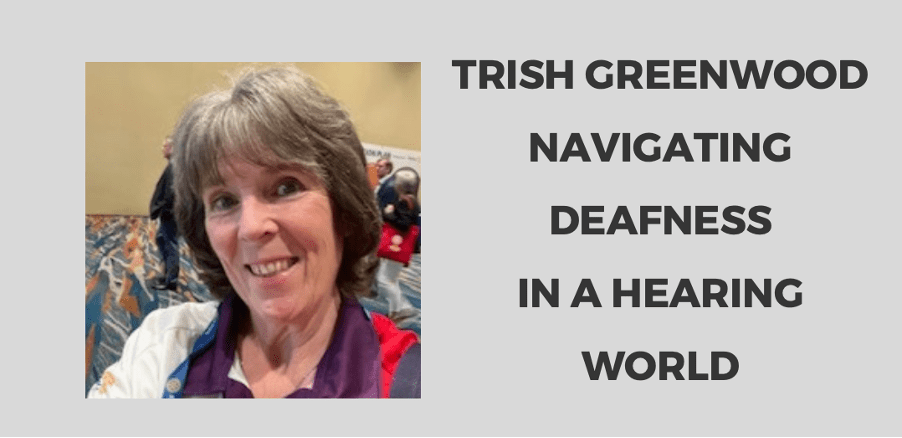
Rotarian Trish Greenwood started to lose her hearing at the age of 27 and struggled to find acceptance of her disability in the hearing world that she had always known. Determined to adapt, she wore hearing aids and learned BSL.
When she became profoundly deaf, she had a cochlear implant, but to her surprise, she discovered she was not accepted in a Deaf world either. So where does she belong? Watch here to discover more.
“Let me put on my glasses so I can hear you better.” It sounds like a joke—but for many people with hearing loss, it’s surprisingly true. They aren’t trying to hear with their eyes—they’re trying to read your whole face, not just the lips.
Photo by Rens D on Unsplash
We often think of lipreading as watching someone’s mouth, but in reality, the entire face plays a role in how we understand speech. People who are hard of hearing rely on a rich blend of visual cues—from lip movements to eye expressions, eyebrow flicks, and subtle shifts in facial tension. It’s a kind of “face-reading” that goes far beyond the mouth.
The Hidden Clues in Every Expression
One friend told me, “I can’t lipread if someone is wearing sunglasses.” And she’s not alone. The eyes give away so much more than we realise—whether someone is confused, curious, or just joking. Covering them up is like turning off the subtitles.
Understanding speech visually is a lot like reading body language in miniature:
A furrowed brow may mean “I’m not sure I understand.”
A raised eyebrow can suggest “Really? Are you sure?”
A crinkled nose might hint at “That sounds a bit odd to me.”
These aren’t conscious signals—they’re the natural punctuation of everyday conversation. For someone relying on visual cues, they can make all the difference between following the thread or getting lost.
Photo by Tati Odintsova on Unsplash
More Than Words: Whole-Face Communication
Here’s what contributes to full-face understanding:
Eyes: Direction, attention, emotion, and reaction.
Eyebrows: Questioning, emphasis, surprise.
Forehead and cheeks: Emotional tone and subtle timing cues.
Jaw and neck: Extra support for noticing certain sounds and rhythms.
Take the sentence: “Oh, that’s just great.” Now imagine it said with wide eyes and a genuine smile—versus narrowed eyes, tight lips, and an eye roll. The words are the same. Reading the whole face changes everything.
Why Visual Clarity Matters
When someone says, “Let me see you properly,” what they mean is: I need the full picture. If you’re in shadow, wearing sunglasses, turning away while speaking, or covering your mouth with your hand, they miss out on vital context.
Even facial hair, masks, or poor lighting can obscure meaning. And while hearing aids and cochlear implants can help, they don’t replace the value of clear, expressive visual communication.
How You Can Help
If you’re talking to someone hard of hearing, try these simple adjustments:
Face them directly – and avoid turning away mid-sentence.
Speak in good light – ideally with your face clearly visible.
Avoid sunglasses – especially in conversation.
Use your expressions – they carry as much meaning as your words.
Pause occasionally – giving the other person time to process what they see and hear.
You don’t need to over-act or exaggerate—just be natural, open, and aware.
Photo by Saung Digital on Unsplash
Communication Is More Than Sound
We tend to think of listening as a purely auditory act. But real-life communication is richer than that. We all read the world with our eyes as well as our ears—some of us just rely on that more than others.
So next time someone says they need to put on their glasses to hear you better, smile. It’s not about hearing more—it’s about seeing you more clearly. And that’s what real connection is all about.
Click here to see our other blogs about lipreading and sign language.
For more communication tips RNID is a great place to start
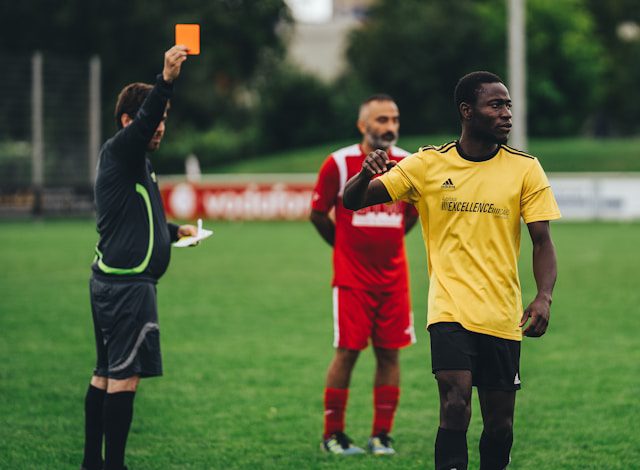
Have you ever been watching a heated football match, and when a controversial decision is made, you know exactly what the player is shouting—even though you can’t hear a thing? That, right there, is lipreading in action.
Photo by Omar Ramadan on Unsplash
It might surprise you to know that lipreading (also called speechreading) is a skill we all use, whether we realise it or not. It’s a natural part of how humans communicate, especially in noisy environments like pubs, busy streets, or parties. Our brains cleverly combine what we hear with what we see—the shape of the mouth, the movement of the lips, and facial expressions—to work out what’s being said.
We’ve Taught Ourselves
Most of us haven’t had formal training in lipreading. We just pick it up as we grow and communicate with others. From an early age, we start recognising the visual clues that go with speech. It becomes instinctive—until we try it without sound and realise how tricky it can actually be!
Photo by Mario Amé on Unsplash
But Not All Words Can Be Read on the Lips
Here’s the catch: lipreading isn’t perfect. Some words look identical on the lips, even though they sound completely different. That’s because certain sounds are made inside the mouth or throat and don’t change the visible shape of the lips much.
Photo by Volodymyr Hryshchenko on Unsplash
Take for example:
Pat, bat, and mat – These all look nearly the same when spoken.
Cough, golf, and gone – Not much happening visually here either.
Can and man – Try mouthing them silently in the mirror—they’re hard to tell apart!
This is actually what ventriloquists rely on. They avoid using words with noticeable lip movements and instead focus on sounds that can be disguised. That’s how they “throw” their voice and make it seem like the dummy is doing all the talking.
Lipreading Is a Lifeline for Many
For people with hearing loss, lipreading becomes a vital communication tool. When sound is muffled, distorted, or absent, being able to read the lips, expressions, and gestures of the speaker can make a huge difference. It’s empowering. It brings confidence. And in many cases, it makes communication possible again.
Photo by Alexandru Zdrobău on Unsplash
Can You Improve Your Lipreading?
Absolutely. While we all use some level of lipreading already, taking it further is totally possible—and beneficial. Lipreading classes are available in many countries, often through adult education centres, community colleges, or charities supporting deaf and hard-of-hearing people.
These classes don’t just teach you to recognise mouth shapes. They often include:
Strategies for filling in the blanks
Tips for dealing with common problem sounds
Practice with everyday conversations
Support from others who are also learning
Plus, they’re a great way to meet people and feel less isolated if hearing loss is new to you.
Photo by Brett Jordan on Unsplash
Other Tips to Boost Your Lipreading
Here are a few more ways to enhance your lipreading skills:
Face the speaker: Make sure you can see their face clearly—good lighting helps.
Ask people to speak clearly, not loudly: Shouting can distort lip movements.
Don’t be afraid to ask for repeats or rephrasing: You’re not alone.
Use context clues: Understanding the topic helps predict words.
Stay relaxed: Tension makes concentration harder.
A Skill Worth Celebrating
Lipreading is an amazing example of how adaptable humans are. Whether you’re aware of it or not, you’re probably using it every day—and with a bit of focused learning, it can become an even more powerful ally in communication.
If you’re interested in learning more, why not look for a local lipreading class or an online group to join? Your eyes might just become your new ears.
We use cookies on our website to give you the most relevant experience by remembering your preferences and repeat visits. By clicking “Accept”, you consent to the use of ALL the cookies.
This website uses cookies to improve your experience while you navigate through the website. Out of these, the cookies that are categorized as necessary are stored on your browser as they are essential for the working of basic functionalities of the website. We also use third-party cookies that help us analyze and understand how you use this website. These cookies will be stored in your browser only with your consent. You also have the option to opt-out of these cookies. But opting out of some of these cookies may affect your browsing experience.
Necessary cookies are absolutely essential for the website to function properly. This category only includes cookies that ensures basic functionalities and security features of the website. These cookies do not store any personal information.
Any cookies that may not be particularly necessary for the website to function and is used specifically to collect user personal data via analytics, ads, other embedded contents are termed as non-necessary cookies. It is mandatory to procure user consent prior to running these cookies on your website.