Hear Glue Ear – How this remarkable, inexpensive device is changing the lives of children with glue ear
Dr Tamsin Holland Brown, describes how her award-winning affordable device “Hear Glue Ear” is supporting families in the UK and beyond. Tamsin shares her story of what led to this amazing innovation and how her own family played such a big part in its development.
To find out more about the Hear Glue Ear device and see coverage on BBC, please visit the website: HearGlueEar
Come and join us and discover how your organisation can deliver inclusive, hearing-friendly environments with Hearing Ambassadors
We all know that too much noise can be annoying. But what if it’s doing more than just fraying our nerves? What if the sounds we’re surrounded by every day—traffic, leaf blowers, nightclub beats, even that never-ending building work—are doing real, lasting damage to our bodies?
It turns out, they are.
Photo by Emma Houghton on Unsplash
Noise: More Than Just a Nuisance
Noise is often brushed off as a minor inconvenience. We might roll our eyes at a loud neighbour or plug in headphones to drown out a train carriage. But medical researchers are starting to warn us that noise pollution—unwanted or harmful sound—isn’t just an irritant. It’s a health risk.
Prolonged exposure to loud noise doesn’t just affect your hearing (though that’s serious enough). Studies now show that noise can:
Increase your risk of heart disease
Disturb your sleep (even if you don’t fully wake up)
Raise your stress levels and blood pressure
Impair your concentration and mental well-being
Contribute to cognitive decline in older adults
That’s quite a list—and it’s not just about volume, but chronic exposure, even at moderate levels.
How Does It Work?
When your ears detect a loud or persistent loud sounds, your body reacts. Stress hormones like cortisol and adrenaline surge. Your heart rate speeds up. Your muscles tighten. You go into a low-grade fight-or-flight state—without even realising it.
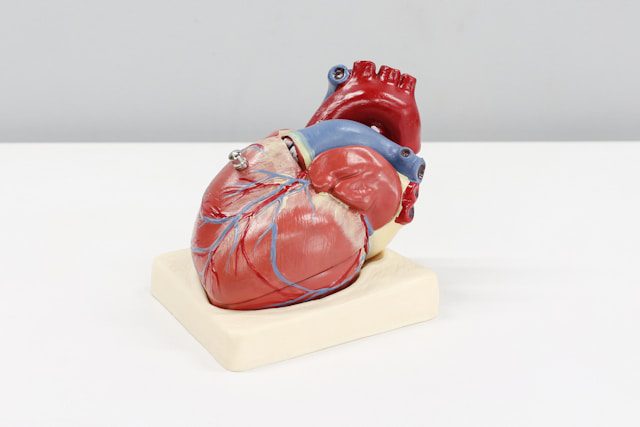
Photo by Ali Hajiluyi on Unsplash
In a quiet woodland, this would be a short, healthy response to danger. But in the middle of city traffic or surrounded by constant background noise, it becomes ongoing. Over time, your body can’t keep up—and the results can be damaging.
Who’s Most at Risk?
While anyone can be affected by noise, some groups are particularly vulnerable:
Children, whose brains are still developing
Older adults, especially those already coping with hearing loss or dementia
Shift workers, who often sleep during the day in noisier environments
People living in urban or low-income areas, where traffic, transport, and crowd noise are hardest to escape
Photo by Enxyclo-Studio on Unsplash
The Hidden Link to Hearing Loss
Of course, one of the most direct effects of loud sound is damage to our hearing. Regular exposure to sounds above 85 decibels (think lawnmower or loud café) can gradually damage the tiny hair cells in your inner ear. Once they’re gone, they don’t grow back.

Photo by Wade Austin Ellis on Unsplash
But even before hearing loss sets in, noise can have an impact—causing ringing in the ears (tinnitus), difficulty concentrating, and auditory fatigue, where listening just becomes exhausting.
What Can We Do?
We can’t eliminate all noise from our lives, but we can take steps to protect ourselves:
Lower the volume on personal devices and TVs Use earplugs or noise-cancelling headphones in loud places Create quiet zones at home—especially in bedrooms Take regular breaks from noise, just as you would from a screen Seek out nature whenever possible—green spaces are quieter and reduce stress Raise awareness about noise pollution in your community

Photo by NordWood Themes on Unsplash
Final Thoughts
Noise isn’t just a background issue. It’s a silent threat to our health and well-being—and it deserves our attention. By understanding the risks and taking simple steps to reduce our exposure, we can protect our ears, our hearts, and our peace of mind.
So next time you find yourself cringing at the roar of a motorbike or the din of a busy café, trust your instinct. Your body knows what it’s doing—and it’s telling you: this noise is not good for me.
Further reading: There is a great article in The Guardian newspaper
Rock Your Look with the Ultimate Fashion Statement
Ready to turn heads while protecting your hearing?
Noise-cancelling earplugs are making waves as the must-have accessory for gigs, bars, discos, and anywhere the music’s pumping! It’s time to elevate your style game and keep your ears in tip-top shape—because nothing’s cooler than looking good and feeling great.
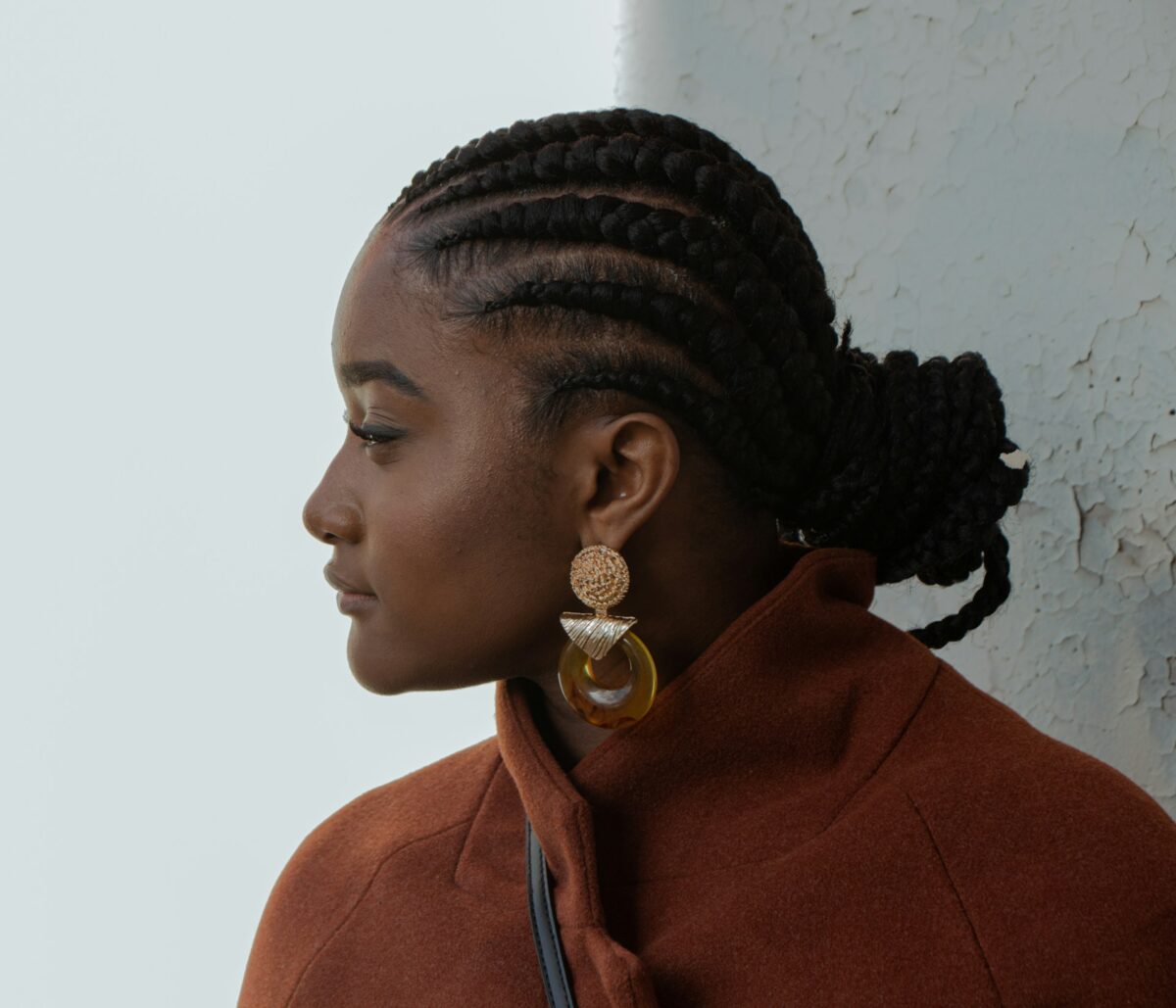
Photo by Steve Harvey on Unsplash
Noise-Cancelling Earplugs: From Utility to Trendsetter
Gone are the days when earplugs were just for work zones or long flights. Today, they’re the latest trend in social scenes, from electric concerts to lively festivals. As we all become more aware of the need to protect our hearing, these tiny gadgets are taking center stage as a blend of practicality and style.
Fashion-Forward and Functional
What makes these earplugs so cool? It’s all about the fusion of fashion and function. Imagine earplugs that match your outfit or mood—sleek black for a classic vibe, or bright colors that pop against the neon lights. With designs that range from minimalist to bold, they’re as much a part of your ensemble as your favorite pair of sunglasses or a killer jacket. And don’t forget the trendy cases—they’re perfect for clipping onto your bag or even wearing as an accessory.
Photo by Stephen Mease on Unsplash
Celebs and Influencers Are All In
If you think earplugs are just for the cautious, think again. Celebrities, musicians, and influencers are rocking them, making hearing protection not just responsible, but downright fashionable. When your favorite artist shows off their stylish earplugs on stage, it sends a clear message: protecting your hearing is the new cool.
Photo by Matty Adame on Unsplash
Why They’re a Must-Have
Let’s talk benefits—because these earplugs are more than just a pretty accessory. They’re your best defense against the roar of a night out, reducing harmful noise while still letting you enjoy the music and conversation. Say goodbye to the post-party ringing in your ears and hello to long-term hearing health. Plus, with customizable fit options, they’re super comfortable, so you can wear them all night without a second thought.
Own the Look, Own the Night
Here’s the best part: noise-cancelling earplugs are all about confidence. Wear them like you own the place. Mix and match with your crew for a coordinated look, or stand out with a color that screams your personality. Whether you’re at a packed gig or dancing the night away at a club, earplugs are your ticket to looking fierce and staying smart.
Photo by Karsten Winegeart on Unsplash
The Future of Party Fashion
As the world wakes up to the importance of hearing health, noise-cancelling earplugs are here to stay—and they’re only getting cooler. By jumping on this trend, you’re ahead of the curve, showing everyone that being mindful and stylish can go hand in hand. Next time you’re out on the town, slip in those earplugs and step out with confidence—because the coolest thing you can wear is a healthy future.
Which Ones Will You Choose?
Metalics or pastel colours, its your choice. See what’s available on the market in Charlotte Vossen’s review of Next Gen Ear Plugs.
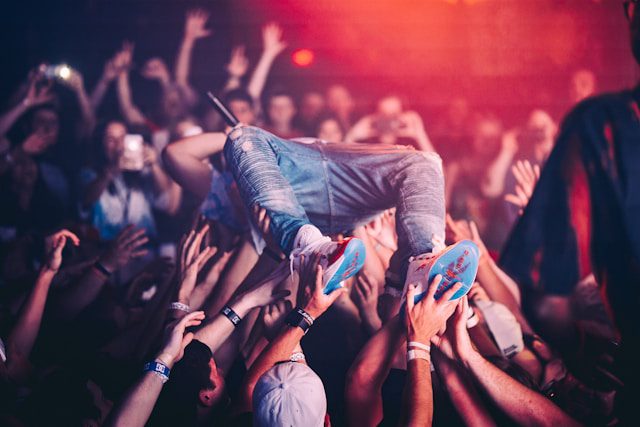
Let’s face it, concerts are EPIC. The lights, the energy, and the feeling of your favourite band vibrating through your chest – it’s pure awesomeness. But here’s the not-so-epic truth: those killer concerts can be brutal on your hearing. No one wants to miss out on the mosh pit fun, but sacrificing your future ability to enjoy music is a major buzzkill. Don’t worry, fellow music lovers, there’s a way to have your concert cake and eat it too (metaphorically speaking). Here’s how you can rage like a rockstar without turning your ears into mush.
Gear Up for Fun (and good hearing )
Forget stuffing tissues in your ears (they’re useless!). Invest in a pair of high-fidelity earplugs. No, seriously, earplugs can be awesome these days. They come in all sorts of colours and styles, some even look like mini in-ears. Plus, good ones, actually improve your concert and dancing experience because they block out the ear-splitting noise without muffling the music, so you can hear and feel everything perfectly, just at a safe volume.
Become a Strategic Dancer
Not all areas of a venue are created equal if the speakers are blasting right next to you like a sonic laser beam, scoot away! Find a spot further back where the music is more chill. You might not be front row center, but your future self with functioning ears will thank you.
Give Your Ears a Breather
Just like your muscles scream for mercy after a workout, your ears need breaks too. Head outside and rehydrate for a few minutes every hour to give yourself a rest from the sonic assault. This lets your ears recover and prevents long-term damage.
Listen to Your Body (and Your Ears!)
Your ears are your body’s built-in volume indicators and if they start ringing or feel uncomfortable, that’s your cue to turn down the volume or take a strategic retreat. Don’t ignore the warning signs.
Educate Your Squad
Spread the word! Talk to your friends about using earplugs. You can even make it a thing – find cool earplugs that match your outfit and rock them with pride. Peer pressure for good, people!
Recover and Recharge
After the concert’s ear-splitting glory, give your precious ears a break. Avoid blasting music through your headphones for a while. Let them fully recover and recharge for the next auditory adventure.
Crank up the fun, not the volume
By following these tips, you can transform yourself into the ultimate concert-going ninja, conquering the mosh pit while keeping your hearing safe. Remember, healthy ears are the key to enjoying music for life. So crank up the fun, not the volume, and keep the music pumping for years to come!
Earplugs that won’t break the Bank
We’re an independent charity and although we don’t endorse any particular product, we did find this awesome review of the top 10 earplugs that will block out the ear-splitting noise and won’t break the bank. It was published in the Independent Newspaper
Tell us about your music life!
Let us know your thoughts about hearing safe and we will publish the best ideas on our website. Email hi@SoundWarriors.org to tell us what works for you.
Dance, create, and compete in the Sound Warriors Dance Challenge—celebrating music, movement, and hearing health for everyone. Join our Dance Challenge today and create a revolutionary dance experience that transcends the reliance on loud music.
Who Can Join ?
Anyone aged up to 14, solo or in a group. Any dance style is welcome – hip hop, TikTok, street, ballet, freestyle – whatever you enjoy!
Photo by Daria Trofimova on Unsplash
Ideas to Try
Through expressive movements and emotive storytelling, create a unique and mesmerising journey without the need for booming soundtracks
Silent Moment: stop the music mid-dance to show what hearing loss feels like.
Props: headphones, ear defenders, or posters showing “too loud.”
Signature Move: create a Sound Warriors signature move
Volume Change: start quiet, get louder, then bring it back to safe.
Group Storytelling: one dancer is “the music,” one is “the ears,” one is “the protector.”
Recognition
Photo by Brands&People on Unsplash
✨ Best Solo
✨ Best Group
✨ Most Creative Story
Winning videos will be shared online and at events to inspire others.
How to Submit Your Video
Photo by Brett Jordan on Unsplash
Step 1: Record Your Dance
Keep it short – up to 3 minutes. Solo or with friends. Any style – it’s up to you!
Step 2: Upload Your Video
Upload your dance to YouTube and set it as Unlisted (so only we can see it). You can also use Vimeo or another platform that provides a link.
Step 3: Email the link to Sound Warriors
Tell us:
Your age:
School or Dance Group (if any):
Send us your video link:
Important: Don’t include your full address, phone number, or personal info in your video or form.
Be creative! Tell the story of music, the danger of loud sound, and how to protect your ears.
Props are allowed: headphones, posters, ear defenders, etc.
Try a signature Sound Warriors move (like pointing to your ears).
Keep your video upright or horizontal – whatever works best for viewing online.
No dance experience needed – just energy, ideas, and creativity!
Are YOU ready to become a Sound Warrior?
Want to know more?
Dive into our website. It’s your one-stop destination for all things related to protecting your precious hearing. From informative articles to engaging blog posts, we’ve curated a wealth of knowledge to help you understand the risks and prevention methods. Our platform isn’t just about awareness; it’s about empowering you to make informed decisions about your auditory health. So, if you’re ready to safeguard your hearing for a lifetime of music and dance, explore our website today and embark on a journey to sound health!
Young people love the sense of excitement that loud music brings.It helps them to escape from the day-to-day world and transcend to new shared experiences, but listening to loud music over a prolonged period can have a damaging effect on our ears.The World Health Organisation has estimated that 50% of all our 12-35-year-olds will have hearing loss by the time they are 50.Read on to find out how Sound Warriors can help you ensure that your child dosen’t become another WHO statistic.
LoH and loud music
Inspired by Dr Ava Hunt Associate Professor of Applied Theatre at Derby University, the young performers of Derby Youth Theatre wanted to tell their friends about the dangers of loud music so they created the character LoH.
LoH’s name stands forLoss of Hearing, and he is doing his best to make sure that the volume is as loud as it can be. LoH hides in plain sight so that people forget he is around, but he is everywhere, at the disco,dance class, gym, cinema, and sports events. He even conceals himself in computer games.
The great news is that although noise-induced hearing loss is irreversible, it’s entirely preventable. Can you help us to spread awareness about ear empowerment? Here are some ideas for you to start a conversation with a young person to stop LoH before he can do any harm.
Talk about hearing and how different sounds can change your mood – the sea, birdsong, a pneumatic drill, a computer game, a rock band. How do loud sounds make you feel?
Try this riddle “What things you can hear but can’t see?
Try to communicate without voice for a few minutes.How does it make you feel?
Imagine Loh getting up to mischief.Where does he like to hang out? What does he do to make it uncomfortable for others?How can you banish LoH from your life?
There are lots more ideas on the activities pages of our website
Love your Ears
Here are some practical measures that you can take to protect your hearing and love your ears.
Follow the 60/60 rule – turn the volume to no more than 60%.Take a break after 60 minutes.
Wear earplugs in noisy environments. There are lots on the market but we especially like the ones created by Loop Earplugs because we think the vibrant colours will appeal to young people.
Unwanted noise is one of the most common environmental problems that is experienced by almost everyone daily. Throughout human history, noise has been recognized as a nuisance and, in some cases, an environmental hazard. To answer the question “How loud is too loud for kids”, we will start by looking at the regulations.
In Britain, the Health and Safety Executive (HSE) has clear guidelines for safe sound levels in the workplace. Sound is measured in Decibels and the guidance states that if employees are exposed to 85 Decibels (or more) on average every working day, they are regarded as being at risk of what is known as noise-induced hearing loss (NIHL). The HSE state that all employees in this situation must be offered hearing protection.
That’s just the starting point. Now we need to know if 85 Decibels is a safe listening level for kids. Unfortunately, this is a bit more difficult than it sounds because the only regulations that we have are for adults in the workplace. There are no regulations for the young ears of growing children. To answer our question, we must delve a little deeper. The guidance comes in two parts, loudness (decibels or dbA) and duration.
Duration is easy to measure, but how loud is 85 Decibels? Well, it is about the noise level of a domestic food mixer. If 85 Decibels is safe for adults, you might have thought that a few Decibels here or there wouldn’t make much of a difference. That is where you would be wrong. For every 3 Decibels increase in sound, safe listening time halves. In other words, if the noise increases from 85 to 88 Decibels (the sound of a hair dryer), the safe daily exposure reduces to 4 hours. You can see the effects of loudness and duration on our Decibel Chart
So far, so good.
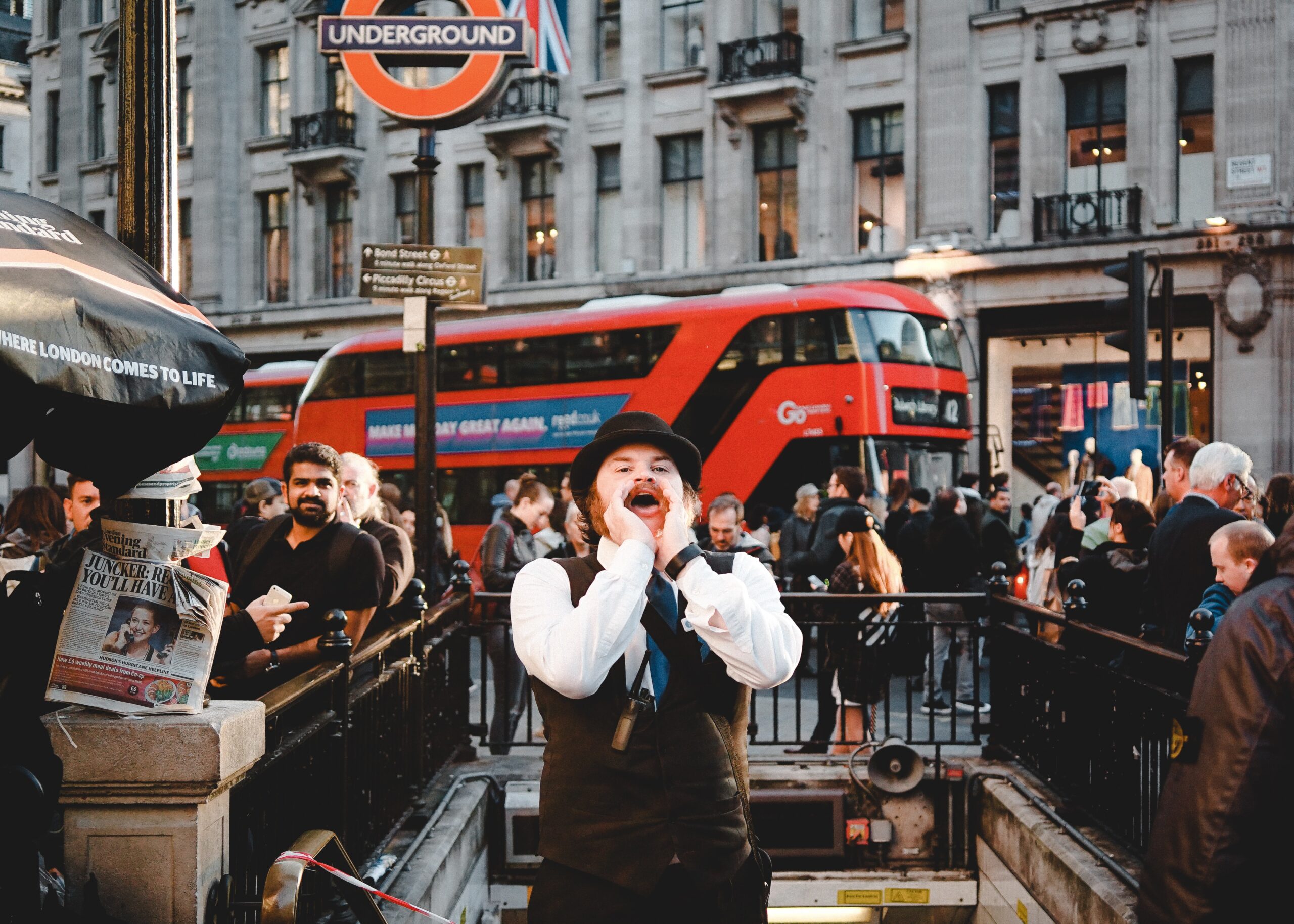
To test the amount of noise pollution that people might be exposed to on a normal day, we decided to measure sound levels on a typical commuter journey. We chose London, but our experiment could have taken place in any town or city. We used a free smartphone app to measure the sounds that we encountered.
Amazingly, we recorded levels of up to 97 Decibels on our 30-minute walk to the station. This is 8 times louder than the 85 Decibels, HSE workplace guideline. Our train journey also peaked at 97 Decibels. In fact, by the time that we had arrived at our destination, we had used up all our daily safe exposure time and we still had a full working day ahead of us as well as the reverse journey home. No wonder more and more people are noticing they have hearing loss!
Workplace versus Recreational noise
Noise is noise. You can’t distinguish between workplace noise, environmental noise, and recreational noise.
It is an indisputable fact that prolonged exposure to loud noise has the potential to cause permanent irreversible damage to our hearing. Take a typical concert or gig where noise levels are 110-120 Decibels. If you are not wearing suitable hearing protection, safe listening time is just a matter of seconds.
Hearing Ambassadors believe that to gain the maximum benefit for lifelong good listening, people should start when they are young. That’s why we set up our Sound Warriors project.
In our quest to discover safe listening levels for kids, we found a fascinating article published by the World Health Organisation in 2018. They reviewed all the available studies at that time and although it is a bit technical, it is incredibly helpful.
Recommendation
In the above article, The World Health Organisation (WHO) recommend that the best way of protecting under 18s would be to adopt not 85 but a 75 Decibel limit, some 8 times quieter than the adult limit. They are concerned that recreational noise is much more difficult to control than occupational noise because social pressures result in young adults actively seeking out recreational environments or activities that have hazardous levels of noise such as bars, discos, gyms, sporting events, personal listening devices and gaming machines.
Things you can do
Grown-ups need to understand what is at stake here because children do not have the autonomy to make health decisions and young adults are likely to engage in behaviour that increases their exposure to high levels of noise.
It is not all doom and gloom, because although its irreversible, noise-induced hearing loss is entirely preventable. Here are several practical ideas from the WHO which will reduce a child’s exposure to recreational noise.
Use noise-reducing or noise-cancelling headphones or earbuds when using personal listening devices.
Limit participation in sporting events, concerts, and other activities where noise levels are likely to be excessively high and wear hearing protection regardless of the duration of exposure.
Utilize smart devices to measure noise exposure of venues and activities to determine if noise exceeds 80 dBA, and adjust behaviours and exposure as necessary.
If you would like to know more about safe listening for children and young people, please email us via our contact form
In this article, we used the following images from Unsplash.com
Girl with headphones – katie-gerrard-sSHzsuYBc9U-unsplash
These fabulous Sound Warriors are members of Derby Youth Theatre.They have just finished recording a series of three short movies that they created with the help of Derby University MA Students Becca and Daisy and their course tutor Dr Ava Hunt.
We use cookies on our website to give you the most relevant experience by remembering your preferences and repeat visits. By clicking “Accept”, you consent to the use of ALL the cookies.
This website uses cookies to improve your experience while you navigate through the website. Out of these, the cookies that are categorized as necessary are stored on your browser as they are essential for the working of basic functionalities of the website. We also use third-party cookies that help us analyze and understand how you use this website. These cookies will be stored in your browser only with your consent. You also have the option to opt-out of these cookies. But opting out of some of these cookies may affect your browsing experience.
Necessary cookies are absolutely essential for the website to function properly. This category only includes cookies that ensures basic functionalities and security features of the website. These cookies do not store any personal information.
Any cookies that may not be particularly necessary for the website to function and is used specifically to collect user personal data via analytics, ads, other embedded contents are termed as non-necessary cookies. It is mandatory to procure user consent prior to running these cookies on your website.