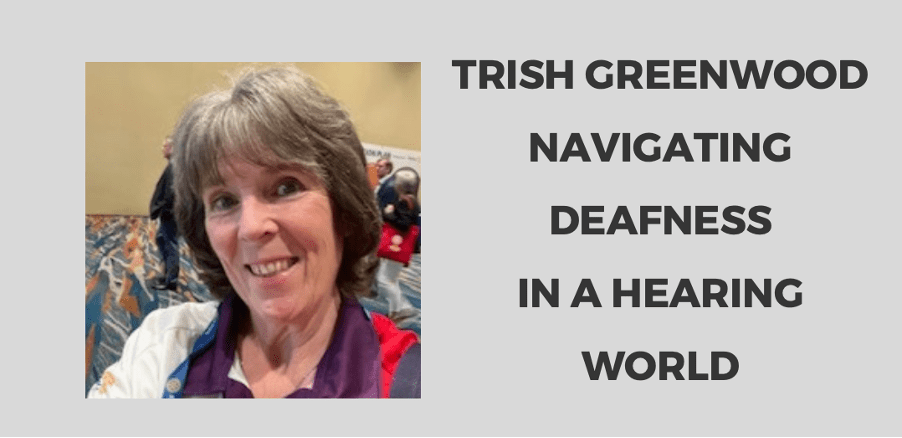
Rotarian Trish Greenwood started to lose her hearing at the age of 27 and struggled to find acceptance of her disability in the hearing world that she had always known. Determined to adapt, she wore hearing aids and learned BSL.
When she became profoundly deaf, she had a cochlear implant, but to her surprise, she discovered she was not accepted in a Deaf world either. So where does she belong? Watch here to discover more.
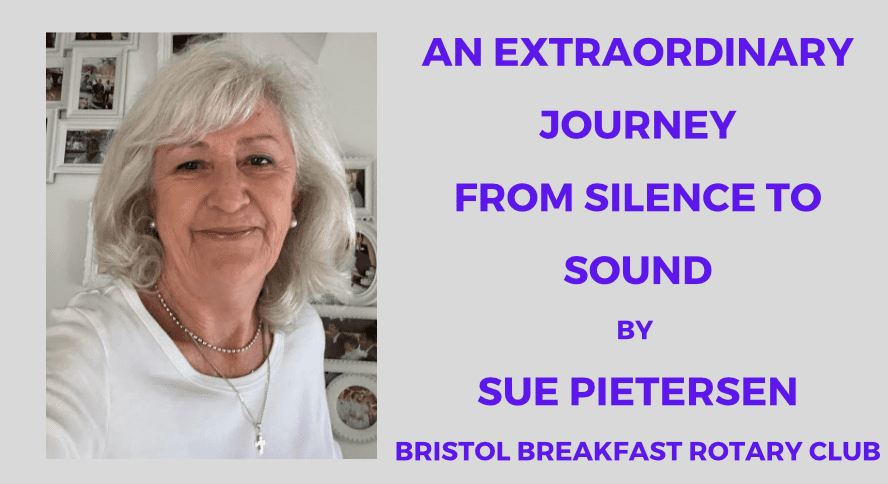
When her son, Hughan, was diagnosed profoundly deaf in 1989, information and support were almost impossible to find. Sue’s talk shares a remarkable journey shaped by determination, chance encounters and belief — showing how small daily efforts can change a life. Sue founded Speech for Deaf Children and continues to champion, support and inspire parents of deaf children worldwide.
In her presentation, Sue refers to a Channel 4 Documentary in the Unreported World Series, Patrick Speaks. Viewers in the UK can see it on YouTube or watch it here:
We all know that too much noise can be annoying. But what if it’s doing more than just fraying our nerves? What if the sounds we’re surrounded by every day—traffic, leaf blowers, nightclub beats, even that never-ending building work—are doing real, lasting damage to our bodies?
It turns out, they are.
Photo by Emma Houghton on Unsplash
Noise: More Than Just a Nuisance
Noise is often brushed off as a minor inconvenience. We might roll our eyes at a loud neighbour or plug in headphones to drown out a train carriage. But medical researchers are starting to warn us that noise pollution—unwanted or harmful sound—isn’t just an irritant. It’s a health risk.
Prolonged exposure to loud noise doesn’t just affect your hearing (though that’s serious enough). Studies now show that noise can:
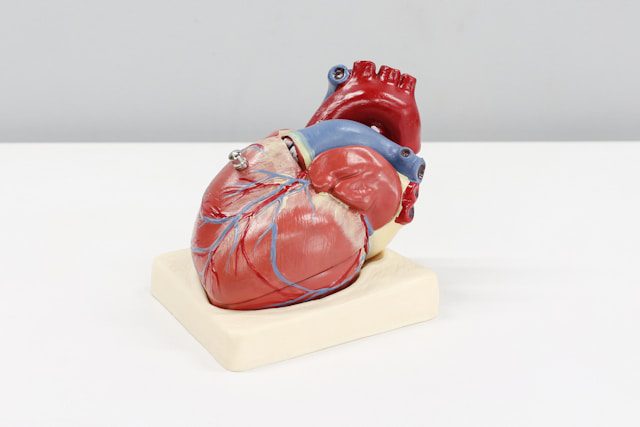
Increase your risk of heart disease
Disturb your sleep (even if you don’t fully wake up)
Raise your stress levels and blood pressure
Impair your concentration and mental well-being
Contribute to cognitive decline in older adults
That’s quite a list—and it’s not just about volume, but chronic exposure, even at moderate levels.
How Does It Work?
When your ears detect a loud or persistent loud sounds, your body reacts. Stress hormones like cortisol and adrenaline surge. Your heart rate speeds up. Your muscles tighten. You go into a low-grade fight-or-flight state—without even realising it.
Photo by Ali Hajiluyi on Unsplash
In a quiet woodland, this would be a short, healthy response to danger. But in the middle of city traffic or surrounded by constant background noise, it becomes ongoing. Over time, your body can’t keep up—and the results can be damaging.
Who’s Most at Risk?
While anyone can be affected by noise, some groups are particularly vulnerable:
Children, whose brains are still developing
Older adults, especially those already coping with hearing loss or dementia
Shift workers, who often sleep during the day in noisier environments
People living in urban or low-income areas, where traffic, transport, and crowd noise are hardest to escape
Photo by Enxyclo-Studio on Unsplash
The Hidden Link to Hearing Loss
Of course, one of the most direct effects of loud sound is damage to our hearing. Regular exposure to sounds above 85 decibels (think lawnmower or loud café) can gradually damage the tiny hair cells in your inner ear. Once they’re gone, they don’t grow back.
Photo by Wade Austin Ellis on Unsplash
But even before hearing loss sets in, noise can have an impact—causing ringing in the ears (tinnitus), difficulty concentrating, and auditory fatigue, where listening just becomes exhausting.
What Can We Do?
We can’t eliminate all noise from our lives, but we can take steps to protect ourselves:
Lower the volume on personal devices and TVs Use earplugs or noise-cancelling headphones in loud places Create quiet zones at home—especially in bedrooms Take regular breaks from noise, just as you would from a screen Seek out nature whenever possible—green spaces are quieter and reduce stress Raise awareness about noise pollution in your community
Photo by NordWood Themes on Unsplash
Final Thoughts
Noise isn’t just a background issue. It’s a silent threat to our health and well-being—and it deserves our attention. By understanding the risks and taking simple steps to reduce our exposure, we can protect our ears, our hearts, and our peace of mind.
So next time you find yourself cringing at the roar of a motorbike or the din of a busy café, trust your instinct. Your body knows what it’s doing—and it’s telling you: this noise is not good for me.
Further reading: There is a great article in The Guardian newspaper
What to Do if You’re Not Getting the Hearing Support You Need
We recently received a heartfelt message from one of our readers that really resonated — and we suspect it might with you too.
“While browsing the web yesterday I came across your very helpful site. I’m not sure how I didn’t pick it up sooner – but it was a very timely event as I’m feeling really quite down about my hearing. I’ll be 81 in a few days’ time…”
This gentleman’s story spans six decades of living with hearing loss — a journey marked by persistence, frustration, and resilience. Diagnosed in his twenties with significant hearing loss in one ear, he was told by hospital audiology that “it’s not something we can correct.” He was eventually given hearing aids, but support remained minimal.
Many years later, another hearing test showed that his other ear now had almost no hearing. Yet again, a consultant’s letter advised him to simply “carry on” with hearing aids — with no further investigation.
Fortunately, a referral to a specialist centre changed everything. There, doctors identified an acoustic schwannoma, a type of benign tumour, and provided targeted treatment and new hearing technology (BiCROS aids). For the first time in decades, he felt his hearing needs were properly understood — and his previously “poor” ear became the better one.
Photo by Anthony Camerlo on Unsplash
Now in his early 80s, he’s once again facing difficulties. Both sets of hearing aids — NHS and private — have let him down, and he fears his remaining hearing may be declining. Another specialist appointment is on the horizon, and he’s understandably anxious and hoping for answers.
So what can you do if you feel you’re not getting the right support for your hearing?
Sadly, this story is not unique. Many people are told to simply “get on with it” — that hearing loss is inevitable, not treatable, or not worth further investigation. But here’s the truth:
You are entitled to proper care and attention — at any age.
Here are some steps you can take if you feel you’re not being listened to or supported:
1. Trust your instincts
If you feel something isn’t right — a sudden drop in hearing, one-sided loss, tinnitus, dizziness, or hearing aids no longer helping — don’t ignore it. Keep a simple log of your concerns to share with your GP or audiologist.
2. Ask for a second opinion
If your first consultation leaves you with more questions than answers, ask to be referred elsewhere — ideally to a specialist ENT or audiology centre. You have the right to be heard, quite literally.
Photo by Brett Jordan on Unsplash
3. Persist with your GP
Some conditions, like acoustic neuromas (schwannomas), can go undetected unless someone takes the time to investigate further. If your GP listens and takes action — as in the case above — it can make all the difference.
4. Check your hearing aids
If you suspect your hearing aids are no longer working well, request a reassessment. You may need reprogramming, servicing, or new technology. If you have aids from both NHS and private providers, don’t be afraid to compare and ask questions.
5. Reach out to others
You are not alone. Connecting with charities, support groups, or local hearing clinics can provide emotional support, practical tips, and sometimes even advocacy help.
Photo by Toa Heftiba on Unsplash
We’re so grateful to our reader for sharing his story — and we wish him the very best at his upcoming appointment.
Have you ever felt let down by the hearing care system? What did you do about it? We’d love to hear your experience — and any advice you’d give others in a similar situation. Let’s learn from each other and help make sure no one is left to struggle alone.
We use cookies on our website to give you the most relevant experience by remembering your preferences and repeat visits. By clicking “Accept”, you consent to the use of ALL the cookies.
This website uses cookies to improve your experience while you navigate through the website. Out of these, the cookies that are categorized as necessary are stored on your browser as they are essential for the working of basic functionalities of the website. We also use third-party cookies that help us analyze and understand how you use this website. These cookies will be stored in your browser only with your consent. You also have the option to opt-out of these cookies. But opting out of some of these cookies may affect your browsing experience.
Necessary cookies are absolutely essential for the website to function properly. This category only includes cookies that ensures basic functionalities and security features of the website. These cookies do not store any personal information.
Any cookies that may not be particularly necessary for the website to function and is used specifically to collect user personal data via analytics, ads, other embedded contents are termed as non-necessary cookies. It is mandatory to procure user consent prior to running these cookies on your website.